PANAJI
In a village tucked away in Meghalaya's East Khasi Hills, children begin their mornings by sweeping pathways and carrying waste to compost pits. In Indore, household garbage segregation has become so deeply ingrained that the city continues to dominate India's cleanliness rankings.
In Ooty, strict curbs on plastic use help protect a fragile hill ecosystem despite a constant influx of tourists. Sikkim requires every tourist vehicle entering the state to carry garbage bags to discourage littering along its highways and scenic routes. In Kerala, thousands of women from self-help groups form the backbone of an extensive door-to-door waste collection network.
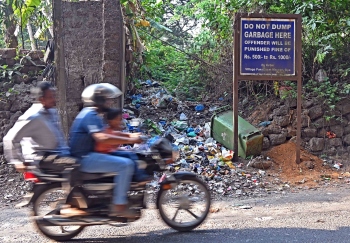
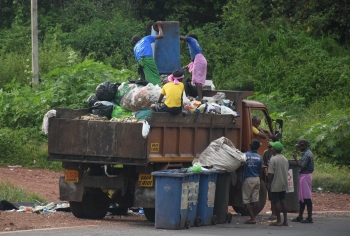
Goa, meanwhile, remains trapped in a battle against the large-scale garbage menace that it has been fighting for decades.
Even as the State pushes towards its target of becoming garbage-free by 2027, official figures show that the volume of untreated waste has increased nearly fivefold in just four years. The contrast with places that have managed to make cleanliness a civic habit rather than an administrative campaign raises an uncomfortable question -- why are others succeeding where Goa continues to struggle?
Mawlynnong's community model
In Mawlynnong, a village in Meghalaya's East Khasi Hills district, littering is almost unheard of. Handwoven bamboo dustbins line every pathway, organic waste is converted into compost, and residents, including schoolchildren, take part in daily cleaning routines. Single-use plastics are banned, smoking is prohibited, and community participation remains central to maintaining cleanliness.
More than two decades after earning recognition as Asia's cleanest village, Mawlynnong continues to be held up as a national model for community-driven sanitation.
Goa, despite possessing significantly greater financial resources, institutional capacity and tourism revenues, finds itself grappling with an increasingly difficult waste management challenge.
Official figures reveal that while Goa generated around 250 tonnes of municipal waste daily in 2021 and processed nearly 98 per cent of it, the State's waste-handling efficiency has since declined. In 2025, Goa generates approximately 193 tonnes of waste each day but processes only 87 per cent, leaving nearly 25 tonnes untreated daily -- almost five times the quantity of unprocessed waste recorded four years earlier.
Cities showing the way
Across the country, however, cities are demonstrating that scale need not be an obstacle to cleanliness.
The latest Swachh Survekshan rankings once again placed Indore at the top of India's cleanliness chart, ahead of Surat and Navi Mumbai. Uttar Pradesh emerged as the country's cleanest state, with Lucknow securing third place among cities with populations exceeding one million and earning the coveted seven-star Garbage Free City certification. Prayagraj was recognised as the cleanest Ganga city, while Gorakhpur received a five-star garbage-free rating. Smaller urban centres such as Moradabad and Bijnor also featured among the country's best-performing cities.
Tourist destinations, too, have shown that environmental protection and heavy visitor footfall can coexist.
In the Nilgiris district of Tamil Nadu, home to Ooty, authorities have imposed stringent restrictions on plastic use and waste disposal to safeguard one of India's most visited hill stations. Despite periodic surges in litter during peak tourist seasons, sustained clean-up drives, strict enforcement and active public participation have helped preserve the region's ecological character. Visitors are encouraged to use paper packaging, while local communities and civic authorities maintain a constant focus on reducing waste generation.
The experience of these destinations suggests that tourism, by itself, need not translate into mounting garbage problems.
Goa's growing challenge
For years, Goa has launched anti-littering campaigns, beach clean-up drives and public awareness programmes. Municipal councils, panchayats and government departments routinely organise waste collection initiatives. Yet the persistence of illegal dumping sites and the growing volume of untreated waste indicate that these efforts have not produced the sustained behavioural change required to solve the problem.
The challenge is likely to become more acute as Goa's population expands and tourist arrivals continue to rise. Government officials maintain that the proposed waste management facilities at Verna and Bainguinim will strengthen processing capacity and reduce pressure on existing infrastructure.